If anyone is looking for a complete money pit of a project, I highly suggest totally disassembling your rear Dana 44 and spreading the pieces out across the garage floor. What an abomination. I would rather rebuild three T-90's than repeat what I've done to this stupid rear axle so far and I've barely accomplished anything. In hind sight, I should have replaced the spider gears, the one damaged carrier bearing race, and left everything else the hell alone.
Given this is such a nightmare, I've decided to attempt setting it up from scratch. Simply slapping the existing shims back in place and bolting it all back up is apt to yield acceptable results but if it doesn't this monstrosity isn't something you can just pop back apart and adjust. Bearings, shims and who knows what else are likely to be damaged with every attempt to disassemble and make adjustments.
I'm forging ahead with a plan of making set-up bearings, races, and going through the motions of and measuring each step of the way. Best case scenario, I'll still have to assemble and disassemble the entire thing on multiple trial runs with the set-up bearings before hammering home the real ones. It's a bona fide project.
I am not confident enough to even begin a "how-to" guide here but I have a few examples of what not to do. The carrier bearings were a real nightmare. When trying to remove them, unless you want to drive back to Harbor Freight with a completely mutilated bearing splitter set you just purchased the day before, don't do this:
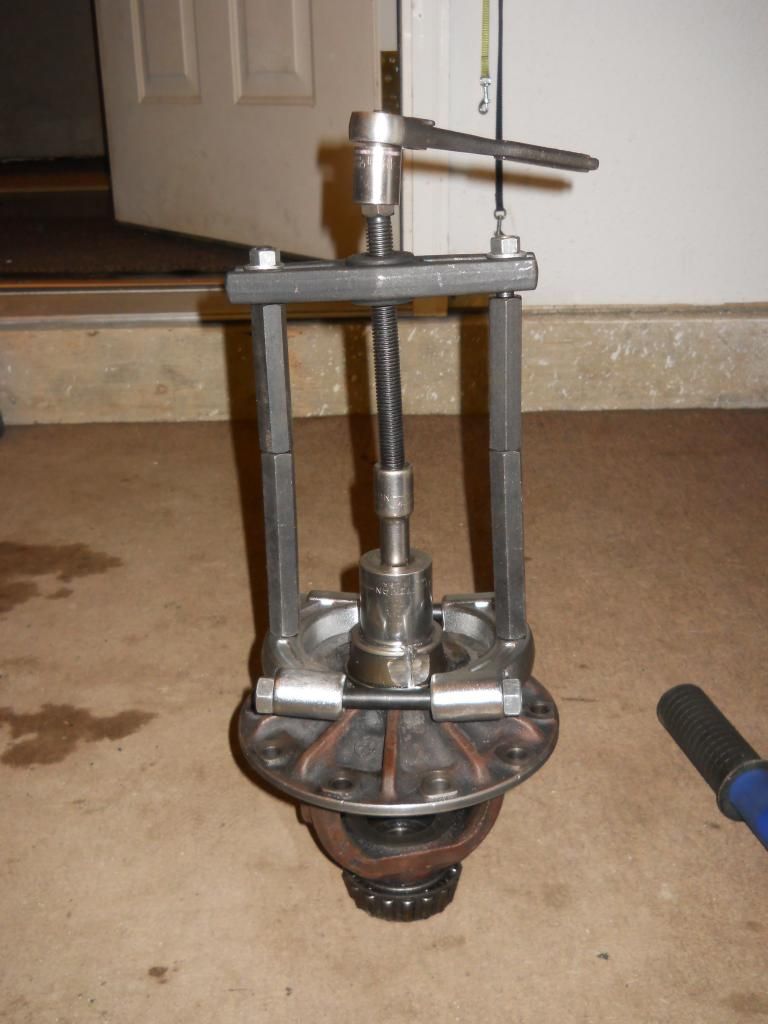
Or this:

And for the love of all things decent don't do this
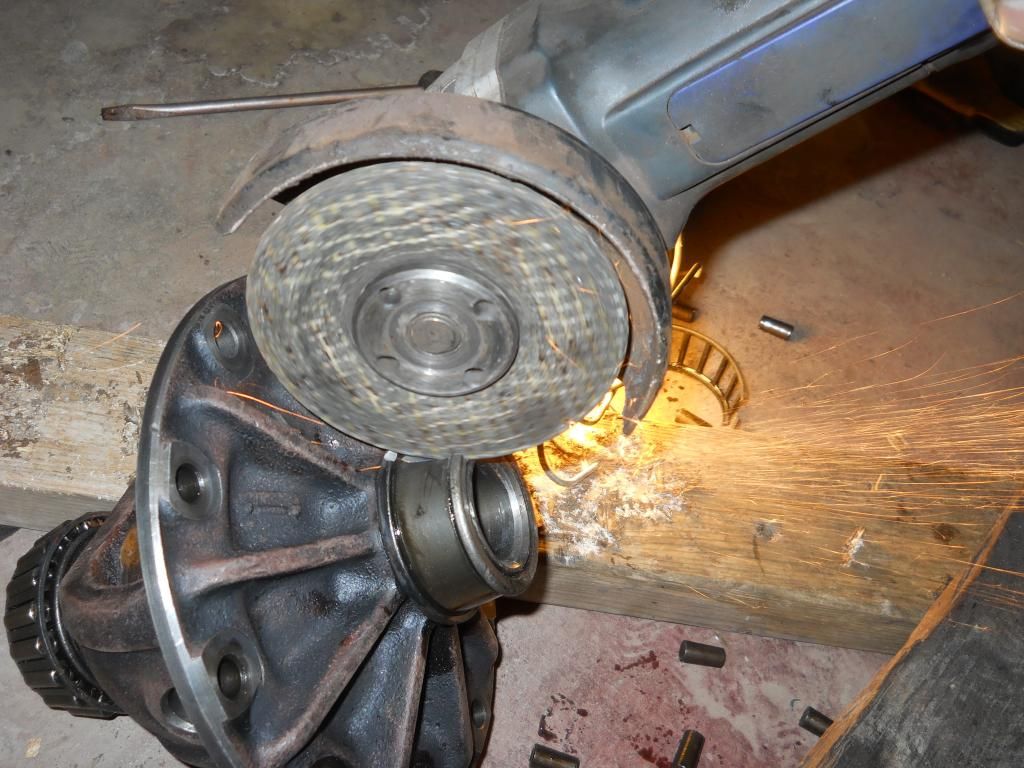
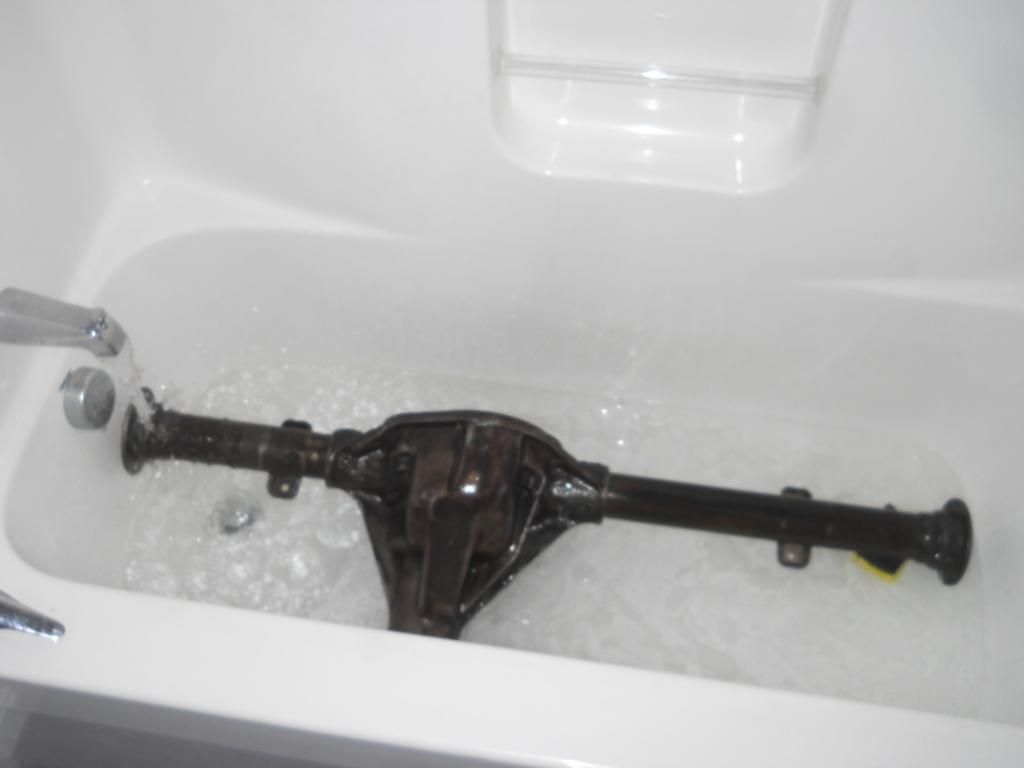
Smuggling this through the living room past your napping wife isn't a good idea either but that's a different story:
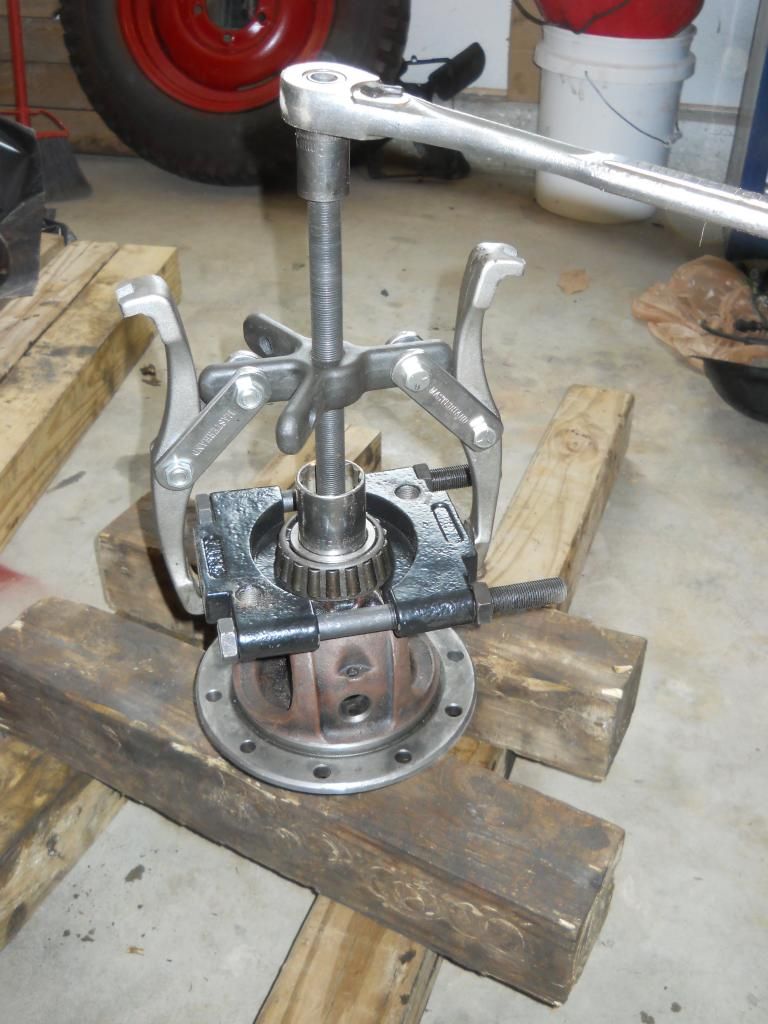
This is the magic formula that finally removed the carrier bearings. A Harbor Freight large bearing splitter with a 2-jaw puller.
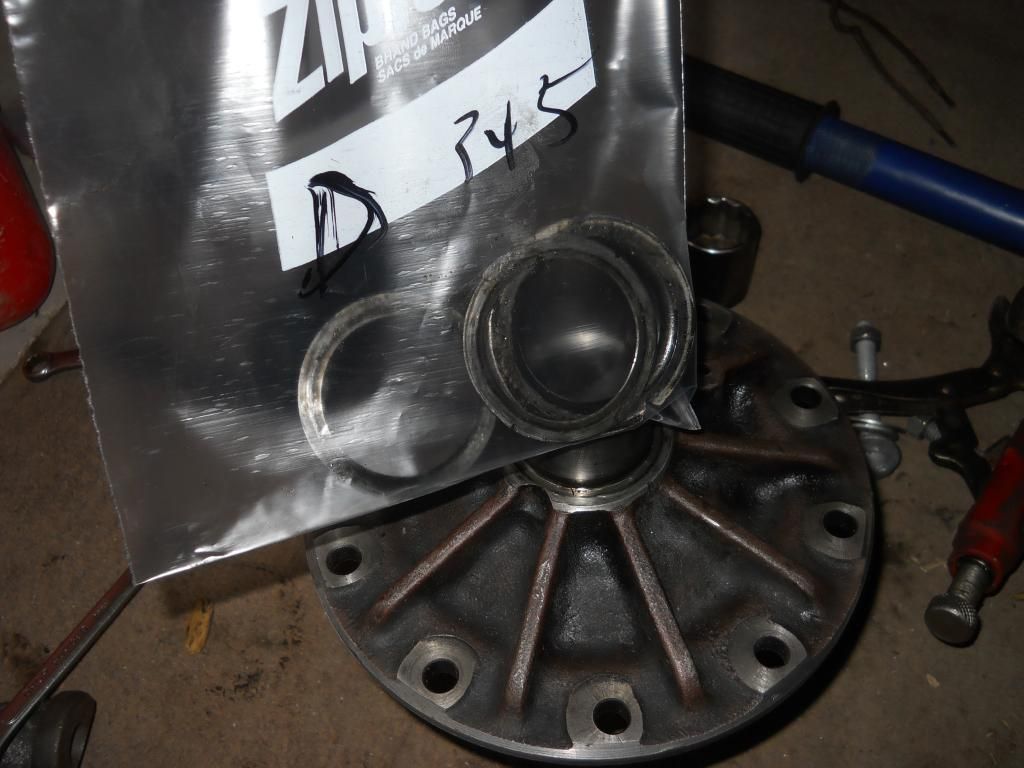
Shims bagged and marked. I will reuse the ones I can and will replace the damaged ones with new shim packs of the same thickness. It'll be a good starting point anyways.
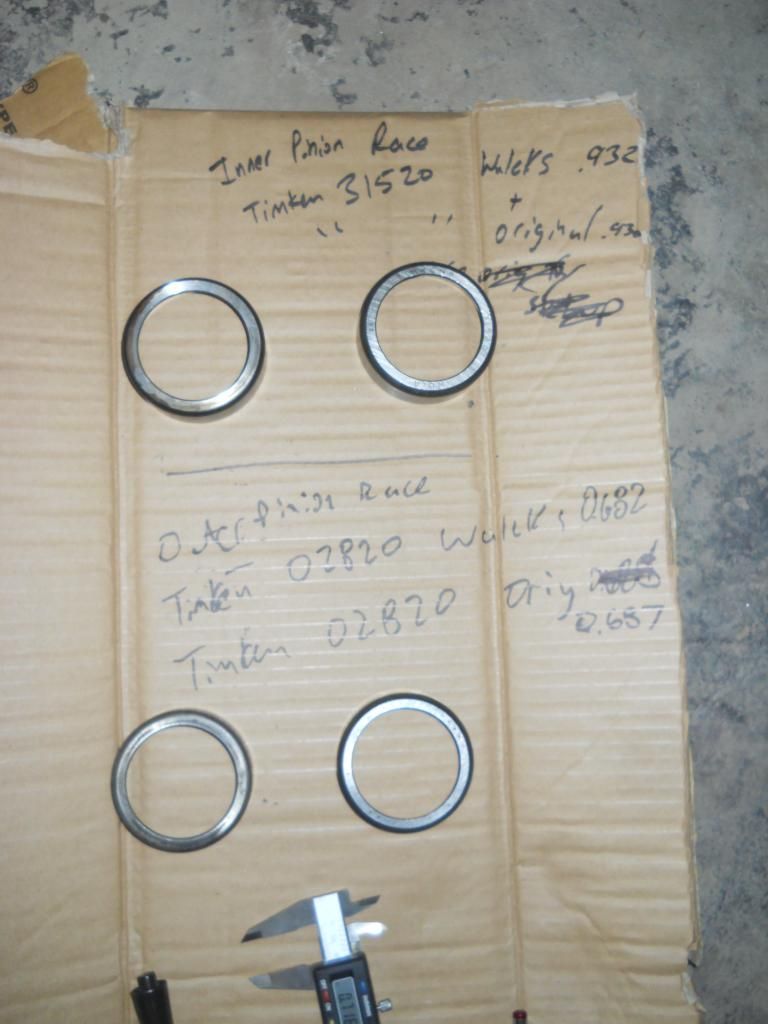
With the carrier properly gutted the disassembly is complete. I got to the first step of installing the pinion gear. Using what few bearings I didn't destroy during removal, I'm making set up bearings that can be slid on and off by hand.

It is encouraging that all the bearings and races received from Walck's are Timkens, just like the l ones I took out.
Pinion gear with new inner pinion bearing and old "set-up" outer bearing.
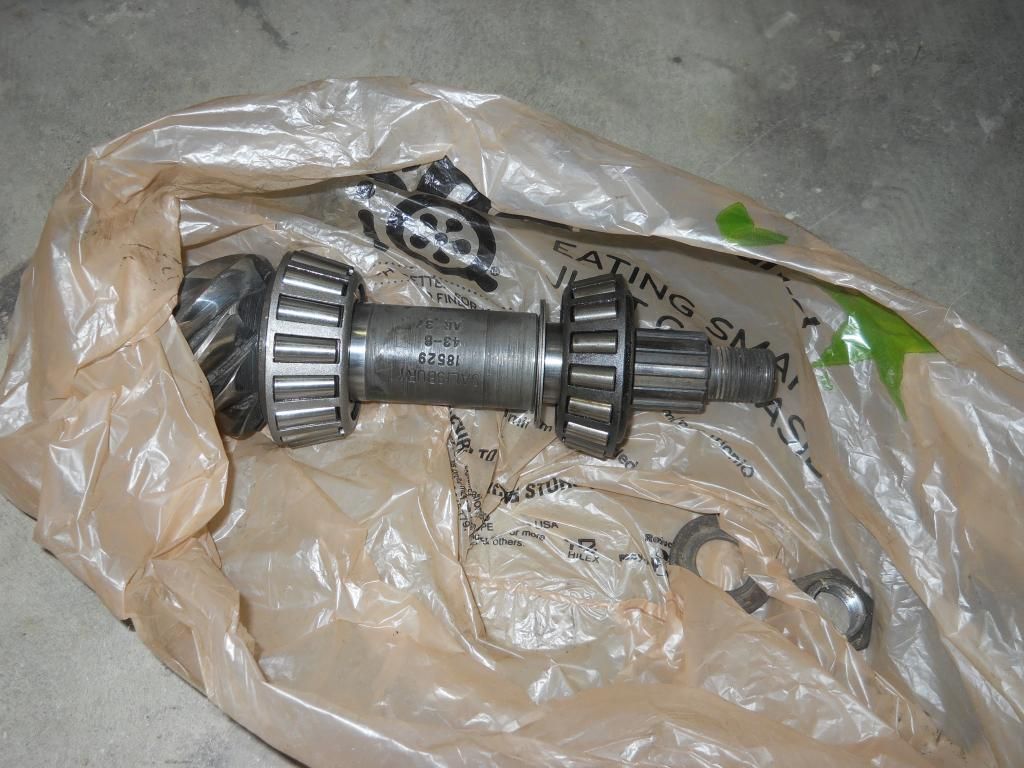
For the bearings I destroyed I'll have to make the set-up bearings out of brand new ones which is kind of a shame but that's the way it goes.
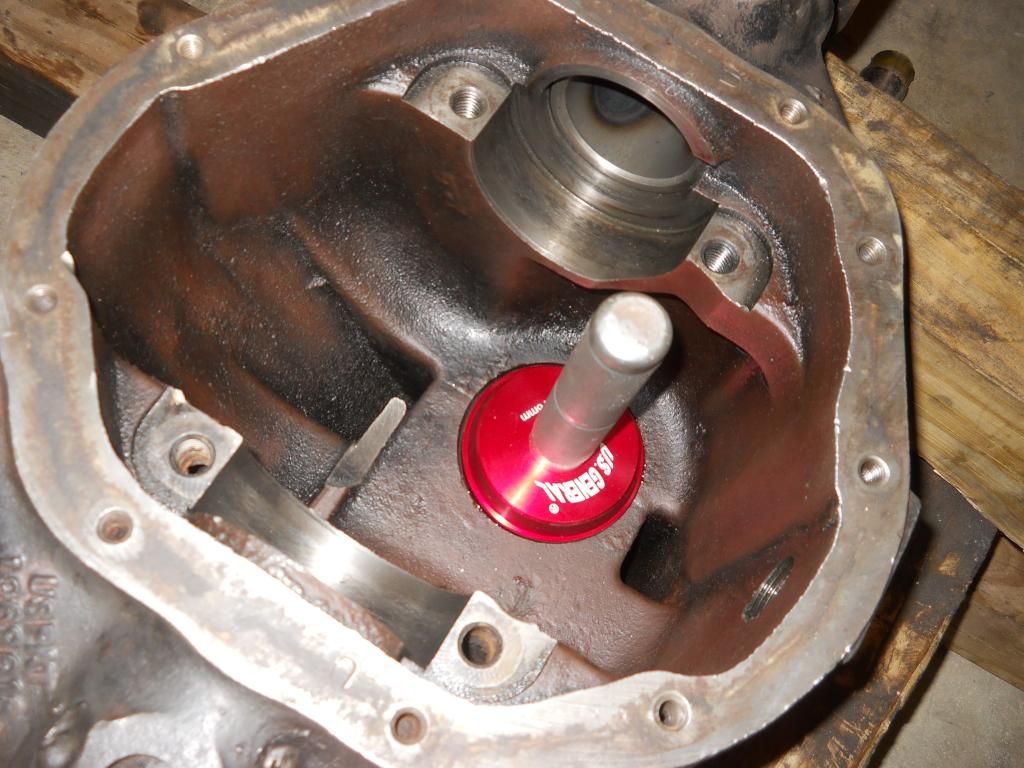
I picked up a set of race drivers at Harbor Freight today too. In a tight application like this it's a lot easier than fumbling around with a socket or the old race. As you're hammering on them they make a different tone once the race bottoms out so you know for sure when it's seated properly.
I also bit the bullet and used a coupon for a 12-ton press. I know that I'll have to press all these bearings on for final assembly. In asking around at a couple shops it was quickly apparent that hiring out press work is not economical. I used this press three times today already which means it has now paid for itself. I wish I bought one of these years ago.
Axle bearing posing as first test subject. Works flawlessly.

Freshly pressed pinion gear bearing. Much cleaner than my typical BFH and ill-fitting length of pipe method.
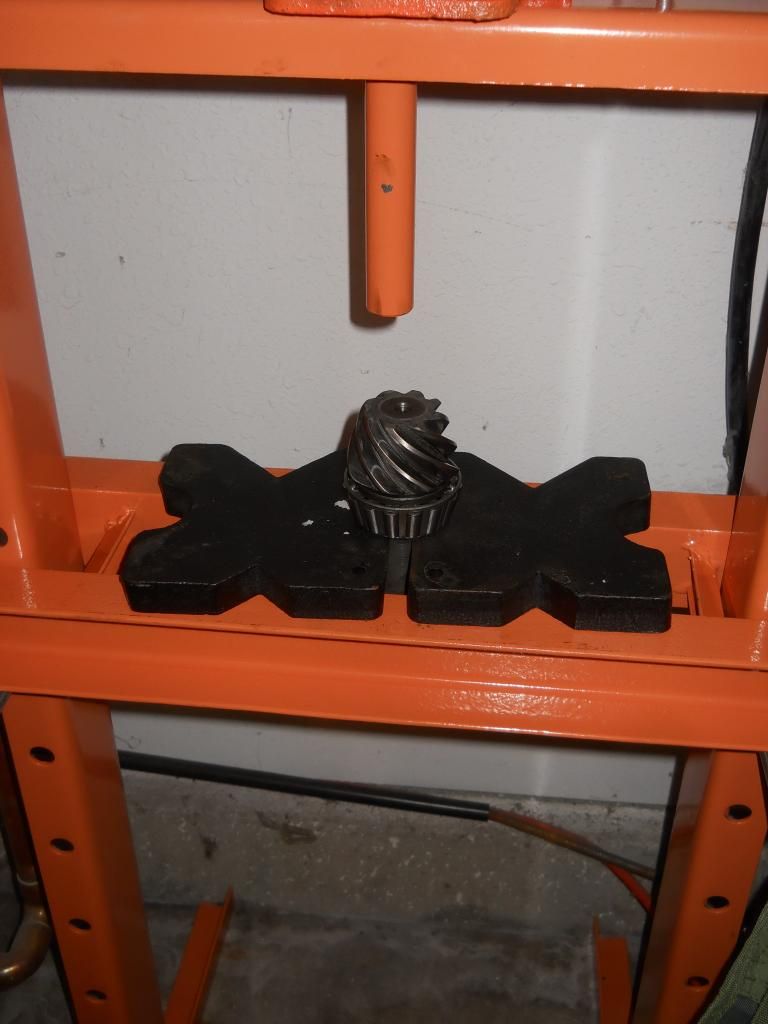
So I now have the pinion gear test assembly installed. Pretty meager progress for a week's time.

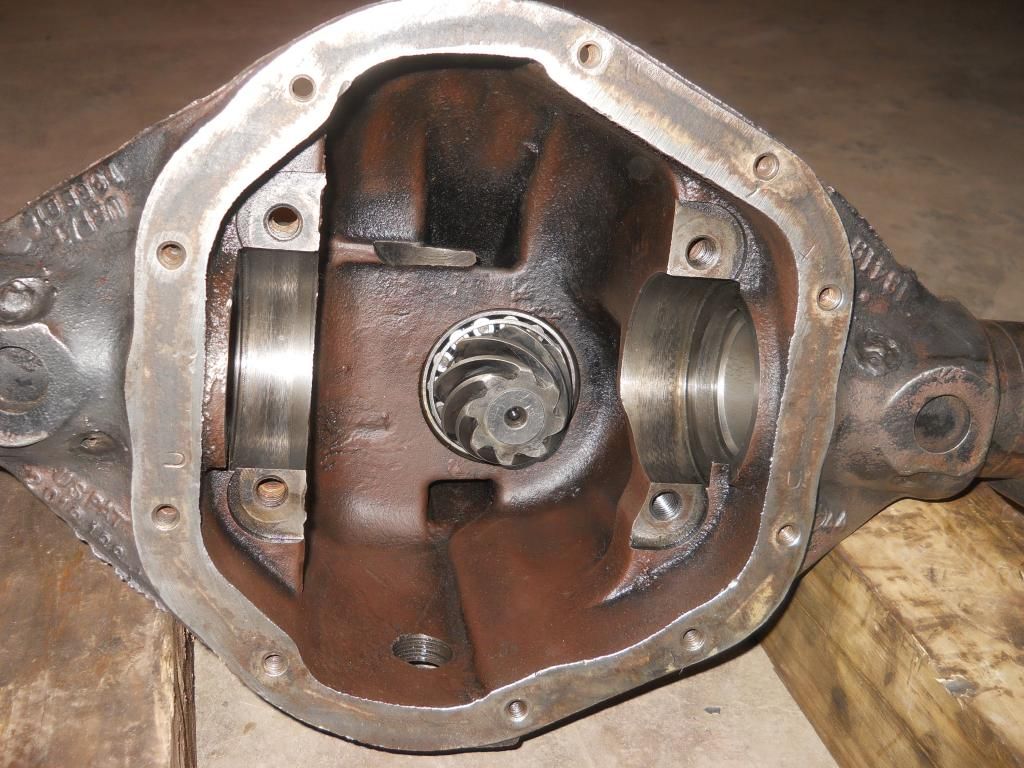
I'm really not sure how this will play out. If I get it back together and it actually works it'll be a miracle. If not, I may be trying to devise a way I can pull a hollow rear-end around with 4WD engaged and just a functional front axle


 Pages:
  '51 3A - revisited (Read 62175 times)


