The CJ3A Page CJ3B.info

Post reply

Note: this post will not display until it's been approved by a moderator.

Name:
Email:
Subject:
Message icon:

Verification:
Type the letters shown in the picture
Listen to the letters / Request another image

Type the letters shown in the picture:
Write the word between words Jeep from this JeepWILLYSJeep?:
How many slot has a GPW grill?  7 - 9 - 11:

shortcuts: hit alt+s to submit/post or alt+p to preview


Topic Summary

Posted by: Rus Curtis
« on: July 01, 2026, 12:38:29 PM »

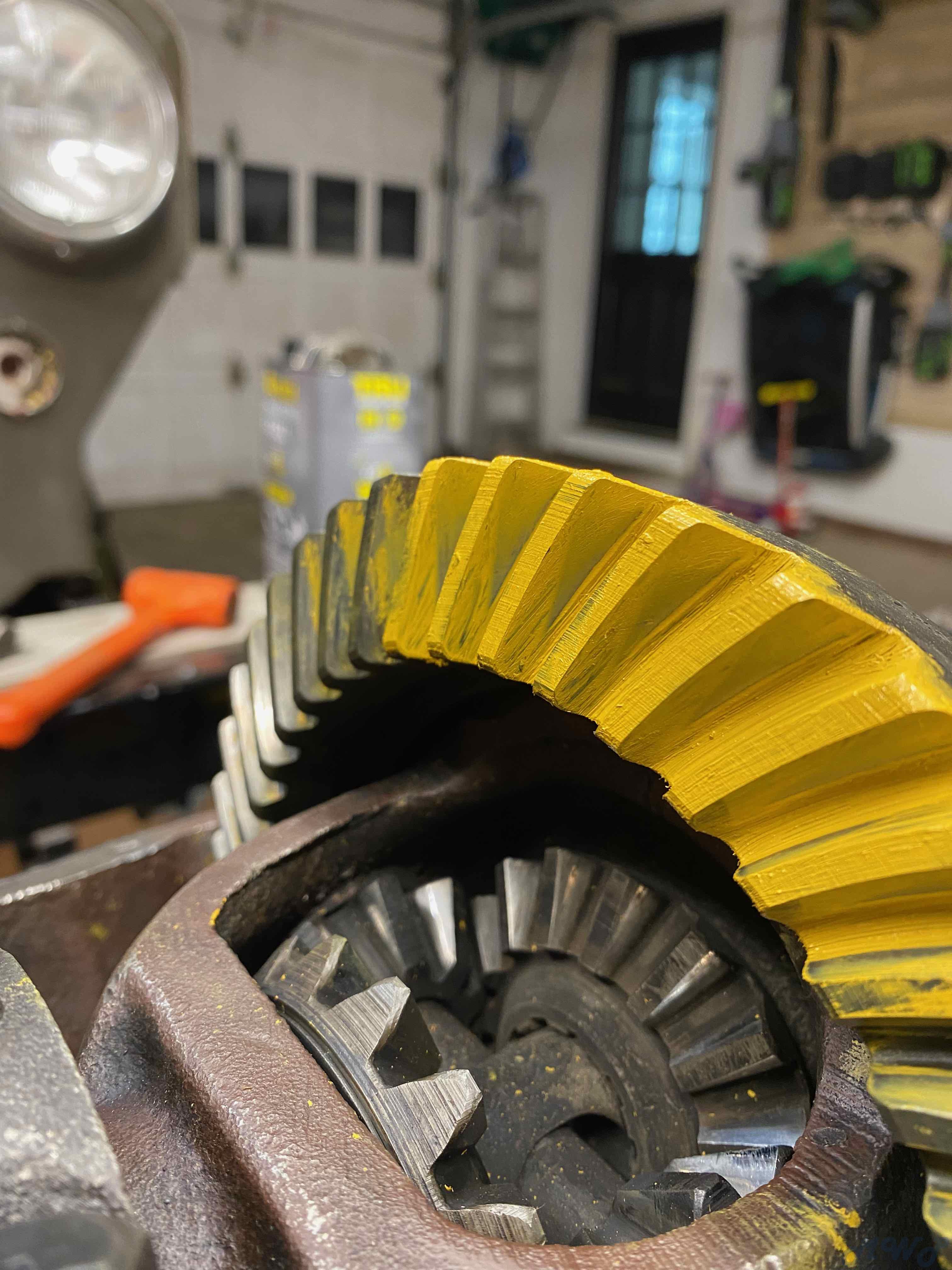
I missed a lot of this while in the penalty box.  Unfortunately, I've never done this.  I've always hired out to axle experts as I'm sure I'd mess it up somehow.  I will say I've successfully rebuilt the inner differential case (where the "spider gears" live) as the side gear tolerance was too large.  I hired out to get the ring/pinion set.  It works but haven't road tested (speed/distance) yet.

Earlier question asked about 100 ft-lbs.
Quote
Following his D44 rebuild, he tightens the pinion nut to 100 ft-lbs in order to test bearing pre-load.

As I'm reading it, it seems you're relaying that he is using that lower amount to "pre-load" test.  Did his information continue to say that is the final torque or does he use the Service Manual value?

I agree that the SM should be first.  There would have to be a significant shift in technology to deviate (here I'm thinking lubricants mostly).  I don't think changing torque values is good.
Posted by: tow hook
« on: July 01, 2026, 12:19:15 PM »

Ok,

Got another one: like many of you, I've been grateful for Brian Hainer (@metalshaper) for the information in his videos.  Following his D44 rebuild, he tightens the pinion nut to 100 ft-lbs in order to test bearing pre-load. 

Manual says to tighten to between 200 and 220. 

Presuming I should stick with the instructions from the manual.  thoughts?

-Kelley

i'd go with the manual. at 100 pounds i didn't know my top pinion baring was bad. glad i went above that to find out
Posted by: Kelley
« on: July 09, 2024, 12:45:13 PM »

Wondering how we feel about this set up:

Ring gear backlash: 0.007"
Pinion preload: ~0.025 in-lbs
 
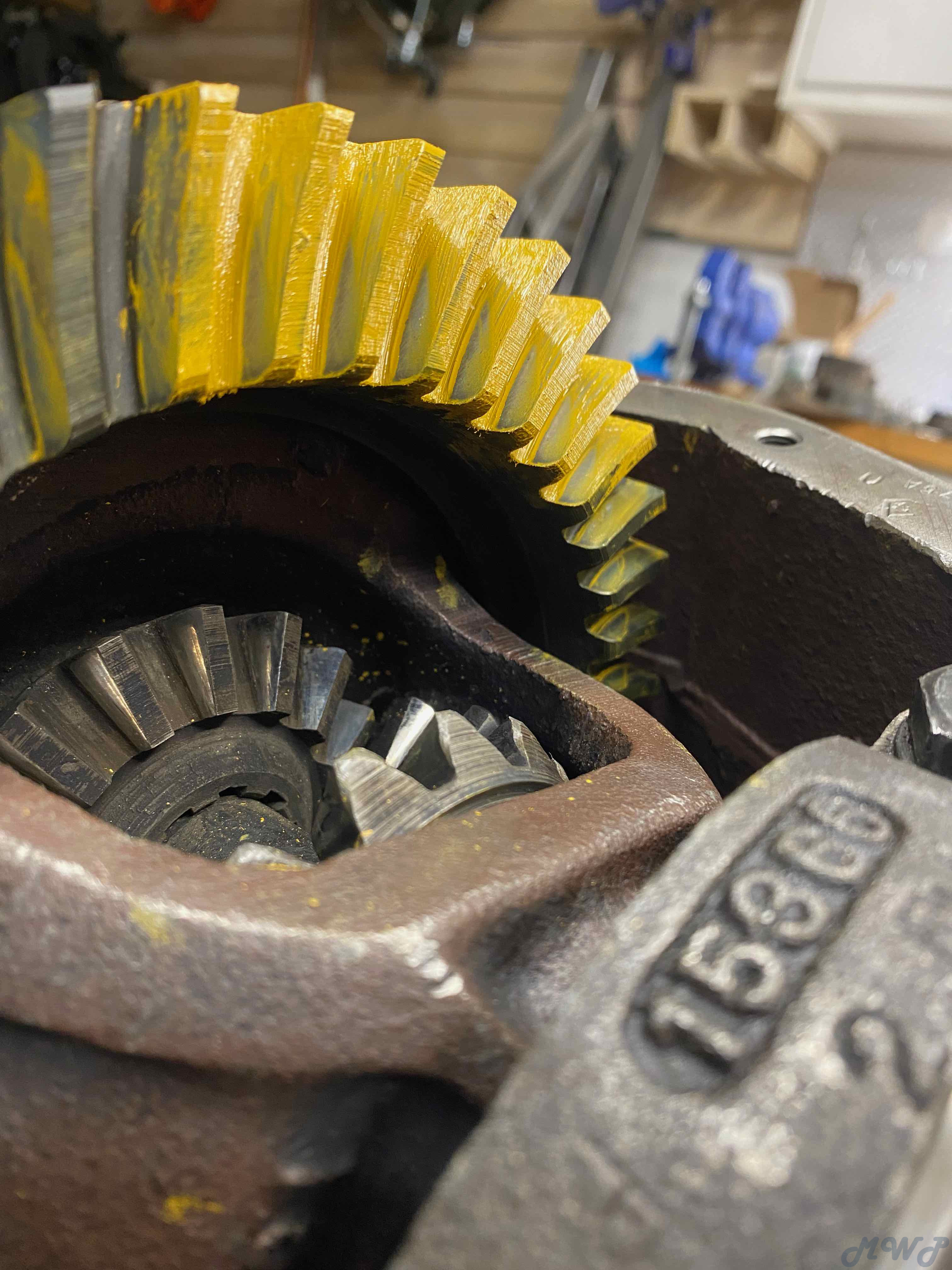
I had to raise the pinion in the case from .032 (original inner bearing shim pack) to .058.  Does anyone think it needs to come in further?

Drive Side:


Coast Side:


Posted by: Kelley
« on: May 30, 2024, 03:29:20 PM »

Once again answered my own question:  No real difference in rotational torque when I tightened the nut to 200 ft-lb.  If it's shimmed right, it's shimmed right. 

Hopefully this helps someone.
-Kelley

Posted by: Kelley
« on: May 30, 2024, 09:43:50 AM »

Ok,

Got another one: like many of you, I've been grateful for Brian Hainer (@metalshaper) for the information in his videos.  Following his D44 rebuild, he tightens the pinion nut to 100 ft-lbs in order to test bearing pre-load. 

Manual says to tighten to between 200 and 220. 

Presuming I should stick with the instructions from the manual.  thoughts?

-Kelley
Posted by: Kelley
« on: May 26, 2024, 01:48:27 PM »

Nevermnd,

Found a combination that worked to get the preload to ~22 in-lb.  Within spec according to the manual (10-25)

Kelley
Posted by: Kelley
« on: May 20, 2024, 01:20:43 PM »

Can someone remind me what I'm shooting for:

Have a Dana 44 rear.  Completely disassembled and being overhauled.  Have new pinion bearings - 0.032" shim pack on the inner bearing and I'm setting the outer shim pack: the original shim pack was ~0.060".  I started out on the new bearings by reusing the original shim pack.  I was getting >40 inch pounds of rotational torque on the yoke (just the pinion, bearings, yoke, washer, and nut - no seals).  Had it in and out to adjust the shim pack a few times thinking that my goal is to achieve between 12 and 20 inch pounds. 

Shim pack --> Torque

0.076" --> almost nothing
0.068" --> 8 to 10 in-lb
0.064" --> 26 to 30 in-lb

is between 20 and 30 in-lb ok on new bearings? or too tight?

thanks
-Kelley